

Fall CSA Week Three | Teaching and Learning

Week 3: September 24th - September 27th
Yesterday, we had the pleasure of hosting a field day for a Vegetable Production class from the University of Wisconsin River Falls. Twenty students, mostly plant science majors, came to tour the farm, see how we grow our crops, and learn more about diversified vegetable farming. It’s always fun to show the farm to students like these - passionate young people who have found their way to farming, or at the very least farm-adjacent learning, earlier in life than we did. They have great questions and palpable enthusiasm.
Talking to these students is always illuminating because it feels like an intersection of theory and practice. Neither Ashley nor I studied farming extensively - although Ashley did take one organic farming course in college en route to an environmental studies degree. So it’s interesting to hear the questions brought up by students with deeper classroom knowledge but more limited hands-on experience. Our answers to questions like “what do you do to maintain soil fertility?” and “how do you manage pests on the farm” depend on time of year, which crop we’re growing, which field we’re in, how much rain we’ve gotten, and on and on. And those answers have evolved each season that we’ve farmed, as we’ve learned the nuances of this farm and others.
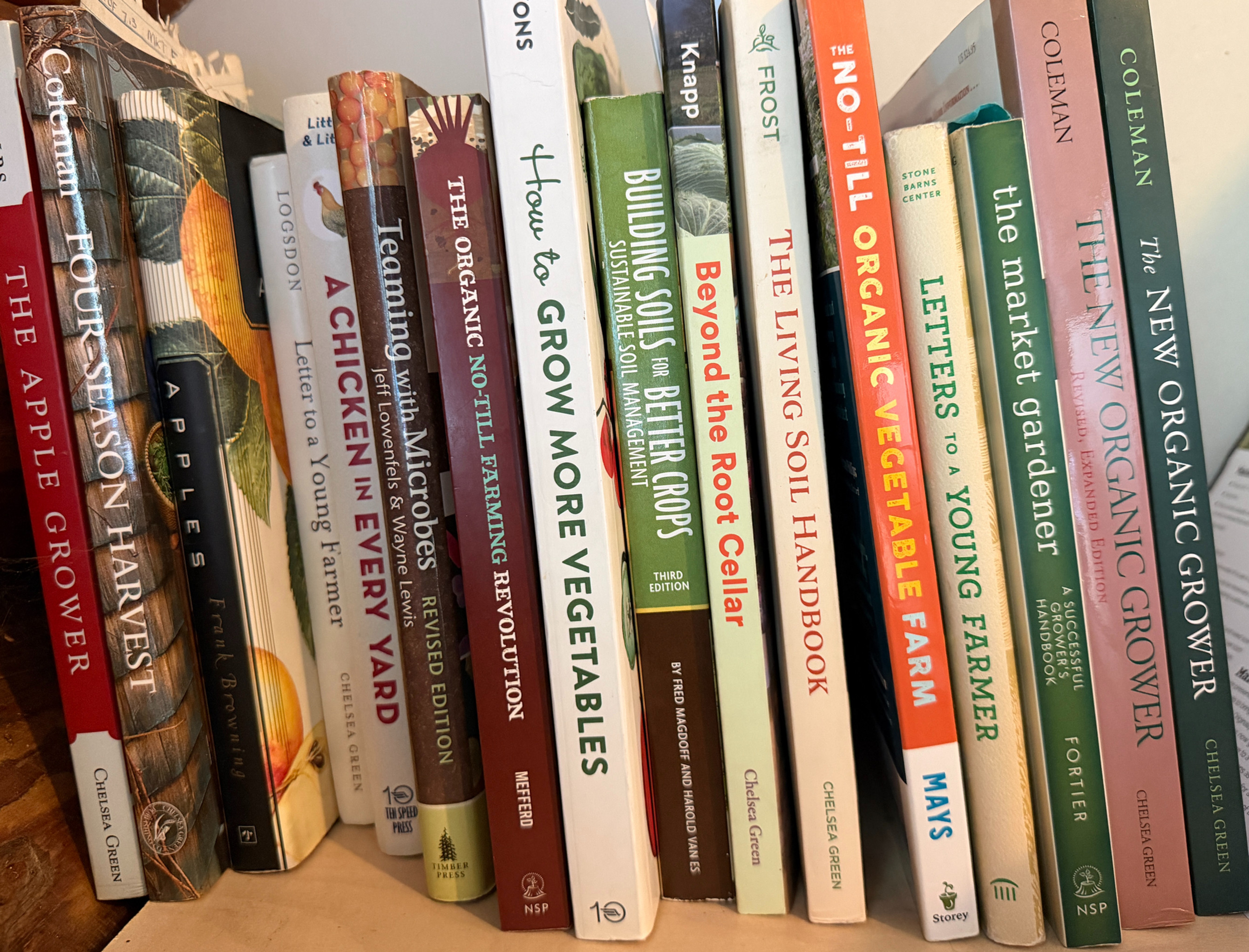
Our farm learning journey also started in textbooks of sorts. After moving to Minneapolis and being bit by the food-growing bug in 2015, we became library mainstays, checking out every book we could find about how small-scale vegetable farms work. Books like Elliot Coleman’s New Organic Grower and Four-Season Harvest, Jean-Martin Fortier’s The Market Gardener, and Daniel Mays’ The No-Till Organic Vegetable Farm helped us form a solid foundation of knowledge. We listened to hours and hours of farm podcasts, particularly the late great Chris Blanchard’s Farmer To Farmer podcast, which consisted of deep-dive interviews with vegetable farmers across the United States. We watched YouTube videos, followed dozens of farms on social media, and even attended farming conferences - before ever working a day on a farm.
After consuming as much information as we could, we were ready to take the plunge and apply that book knowledge. Ashley spent a year working at Prairie Drifter Farm in Litchfield, MN, absorbing the techniques, decision-making processes, and systems of a fine-tuned organic CSA operation. We took an online course that showed us how those systems worked on another farm, consuming hours of video modules to learn how some of the world’s best growers grow. And we participated in the Land Stewardship Project’s Farm Beginnings Program - an intensive course focused on farm finances, holistic planning, and enterprise management.
Then, we really got our hands in the soil, restarting California Street Farm in Northeast Minneapolis. We turned sod into vegetable beds, put up our first high tunnel, started a weekly on-farm farm stand, and went to market every summer weekend for three years. We then spent another year at Prairie Drifter, looking at the farm with new perspective through more experienced eyes and continuing to learn. And in 2023, fortuitously, we reached out to Hallie at 10th Street, who happened to be looking for someone to take over the farm. We spent a year learning the nuances of this farm from her, before taking the reins, completing the journey from burgeoning interest to book learning to apprenticeship and then to ownership.
That’s a long-winded way of explaining why whenever we’re asked to host a field day, to meet with students, or to speak at a farming conference, we say yes. In short, it’s an opportunity to pay back the reams of knowledge that other farmers have shared with us over the past decade. And hopefully someone that attended yesterday’s field day will take something they learned to another farm, where they’ll apply their own mix of experiences and knowledge.
Small-scale vegetable farming is a dispersed, but tight-knit community, and we rely on each other to better understand how to make this whole concept work. And we wouldn’t be able to do what we do without the generosity and support of other farmers sharing their experience. To be asked to share a small amount of our knowledge with others is an amazing compliment - especially because not long ago we were the ones checking out books from the library, eager to learn whatever we could about how to grow food.
Have a week of teaching and learning,
Chris, Ashley, and the 10th Street Farmers
In Your Share This Week
Choice:
Beets: These earthy beauties are good in sweet and savory roles alike. Boil, roast, or grate into baked goods! Store in an airtight bag or container in your fridge.
Carrots: These carrots are sweet, crunchy, and oh so addicting! Remove tops and store in an airtight bag or container in your fridge.
Choice:
Ginger: Yes, you can grow ginger in Minnesota! This beautiful fresh ginger has been thriving in our greenhouse all summer. Use it just like you would the ginger you buy in the store, but without the peeling! Store in an airtight bag or container in your fridge. It also freezes exceptionally well - just grate it into any dish you want to use it in.
Peppers: Sweet peppers are amazing raw, with dips, or added to a skillet or grill. Store in an airtight bag or container in your fridge.
Herbs: Your choice of an herb - cilantro, sage, or thyme.
Choice:
Spinach: This spinach is oh-so-tender. Use as a salad base, sautéed as a side dish or bake into a casserole. Store in an airtight bag or container in your fridge.
Farm Mix Salad Mix: A diverse mix of tasty red and green lettuces. Delicious with just olive oil and salt, or dress it up! Store in an airtight bag or container in your fridge.
Arugula: Peppery greens that add zip to a salad. We love arugula dressed simply with oil and salt. Store in an airtight bag or container in your fridge.
Baby Kale: This hearty greens mix is the perfect base for a fall salad. Or try it braised or baked in your dish of choice. Store in an airtight bag or container in your fridge.
Choice:
Kohlrabi: These alien-like roots are a cousin of radishes and salad turnips - mild and delicious. Peel and eat raw or cooked! Store in an airtight bag or container in your fridge.
Head Lettuce: Beautiful crisp lettuce heads. Great for everything from lettuce wraps to salads and sandwiches. Store in an airtight bag or container in your fridge.
Pea Shoots: Sweet and crisp, these make a great addition to sandwiches, wraps, salads or can be lightly sautéed as a side dish. Store in an airtight bag or container in your fridge.
Choice:
Cauliflower: This versatile veggie is tender and delicious - we love it in curries and stews, roasted, or fried up as a wing substitute! Store in an airtight bag or container in your fridge.
Broccolini: Tasty tender broccoli shoots - eat them leaves and all. Store in an airtight bag or container in your fridge.
Cabbage: A staple across cultures, cabbage is equally tasty in a fresh cole slaw and roasted in the oven. Versatile, storable, and beautiful. Store in an airtight bag or container in your fridge.
Choice:
Tomatoes: The tomatoes are still kicking! Store on the counter - never in the fridge!
Winter Squash: These early-fall winter squash are so tasty. Great roasted and stuffed! Store on your counter.
Potatoes - Russet: These potatoes are famous for a reason - great baked, fried, steamed, or mashed. Store in a dark, dry place.
Onion: A pantry essential. Onions make a flavorful start for soups, sautees, or a sheet pan of roasted veggies. Store in a cool, dark place.
Full Share Choice:
Salad Turnips: Also called Hakurei Turnips, these fresh-eating turnips are tasty and versatile. Slice them up with hummus, sauté them, roast them in the oven, or even try them on the grill. Store in an airtight bag or container in your fridge.
Watermelon Radishes: These incredible fall radishes look like a watermelon when you slice them in half! Sweet with a hint of radish spiciness, they’re great fresh or cooked. Store in an airtight bag or container in your fridge.
Freebie if you want it: Brussels Sprout Tops: Every fall we “top” our Brussels Sprouts, cutting the head off the plant to encourage it to send energy toward growing bigger sprouts. The tops of these plants are delicious - use the leaves just like cabbage or collard greens. Take one if you want one! Store in an airtight bag or container in your fridge
Kitchen Inspiration
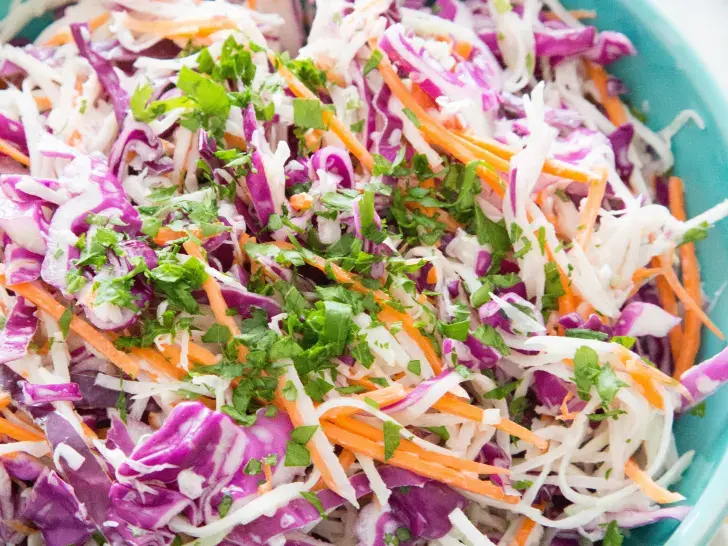
Last night we made a really tasty kohlrabi and carrot slaw, which felt like a nice mix of late summer and early fall. It’s a super flexible recipe, too, so you can adjust it based on whatever you pick out for your share. If you grab a Brussels Sprout top, that would be a nice addition to a slaw - or lean into it and cook the leaves like collard greens.
We also have fresh ginger as a choice this week. We’ve been growing this jungle-loving crop in our hottest greenhouse and caterpillar tunnel all summer, where it has been thriving. Now that the colder weather is here, it’s the perfect warming flavor for carrot ginger soup or a broccolini stir fry. Or maybe it’s time to really lean into fall and use beets and cabbage and other tasty goodies for an indulgent bowl of borscht.
Happy eating!
Please remember to check your name off on the list!
And please bring back your Purple or Blue bag each week!
Thank you.


Comments